The Stone Jewelers Don't Want You to Know

Der Stein, den Juweliere verschweigen

The Stone Jewelers Don

Image: AI-generated · Bild: KI-generiert

🇬🇧 English

This article contains affiliate links. If you buy through them, we may earn a commission at no extra cost to you.

Why Diamonds Are No Longer the Only Option

For decades, diamonds have been positioned as the ultimate symbol of love, luxury, and lasting elegance. The marketing behind them is so powerful that many people never stop to question whether there are other options — options that are just as beautiful, sometimes more so, and significantly more affordable. The truth is, the world of gemstones is vast, breathtaking, and full of stones that rival or even outshine diamonds in sparkle, colour, and character.

Whether you are shopping for an engagement ring, a statement necklace, or a delicate everyday piece, diamond alternatives deserve serious consideration. Here is everything you need to know about the most stunning stones available today — and why more fashion-forward buyers are choosing them over traditional diamonds.

Moissanite: The Ultimate Diamond Look-Alike

If you want maximum sparkle without the diamond price tag, moissanite is your best friend. Originally discovered in a meteor crater, moissanite is now lab-created and widely available. It has a refractive index higher than a diamond, meaning it actually disperses more light and produces even more rainbow-like flashes — a quality known as fire.

  • Hardness: 9.25 on the Mohs scale (diamonds are 10), making it extremely durable for daily wear
  • Price: Typically 80–90% less than a comparable diamond
  • Appearance: Nearly identical to a diamond to the naked eye
  • Verdict: The top choice for budget-conscious buyers who want the diamond look

Moissanite has surged in popularity among millennials and Gen Z buyers who prioritise value and ethics alongside aesthetics. It is also a favourite at La Joya Jewelry La Joya Jewelry, where beautifully crafted moissanite pieces are available in a wide range of settings and styles to suit every taste.

Sapphire: Royally Beautiful and Timeless

Made famous by Princess Diana — and now Kate Middleton — the blue sapphire engagement ring is one of the most iconic pieces of jewellery in modern history. But sapphires come in virtually every colour imaginable: pink, yellow, white, peach, and even ultra-rare Padparadscha (a delicate salmon-pink hue).

  • Hardness: 9 on the Mohs scale — excellent for everyday wear
  • Price: Varies widely, but natural sapphires are generally far less expensive than diamonds of similar size
  • Appearance: Deep, rich colour saturation with a natural lustre
  • Verdict: Perfect for those who want a colourful, meaningful, and historically significant stone

White sapphires, in particular, are gaining traction as diamond substitutes. They offer a clear, bright appearance with a slightly softer sparkle that many find more understated and elegant.

Morganite: The Romantic Pink Dream

If your jewellery style leans towards the soft, romantic, and feminine, morganite may be the stone you have been searching for. This peachy-pink variety of beryl has experienced an enormous surge in popularity over the last decade, particularly for engagement rings.

  • Hardness: 7.5–8 on the Mohs scale
  • Price: Very affordable, especially in larger carat sizes
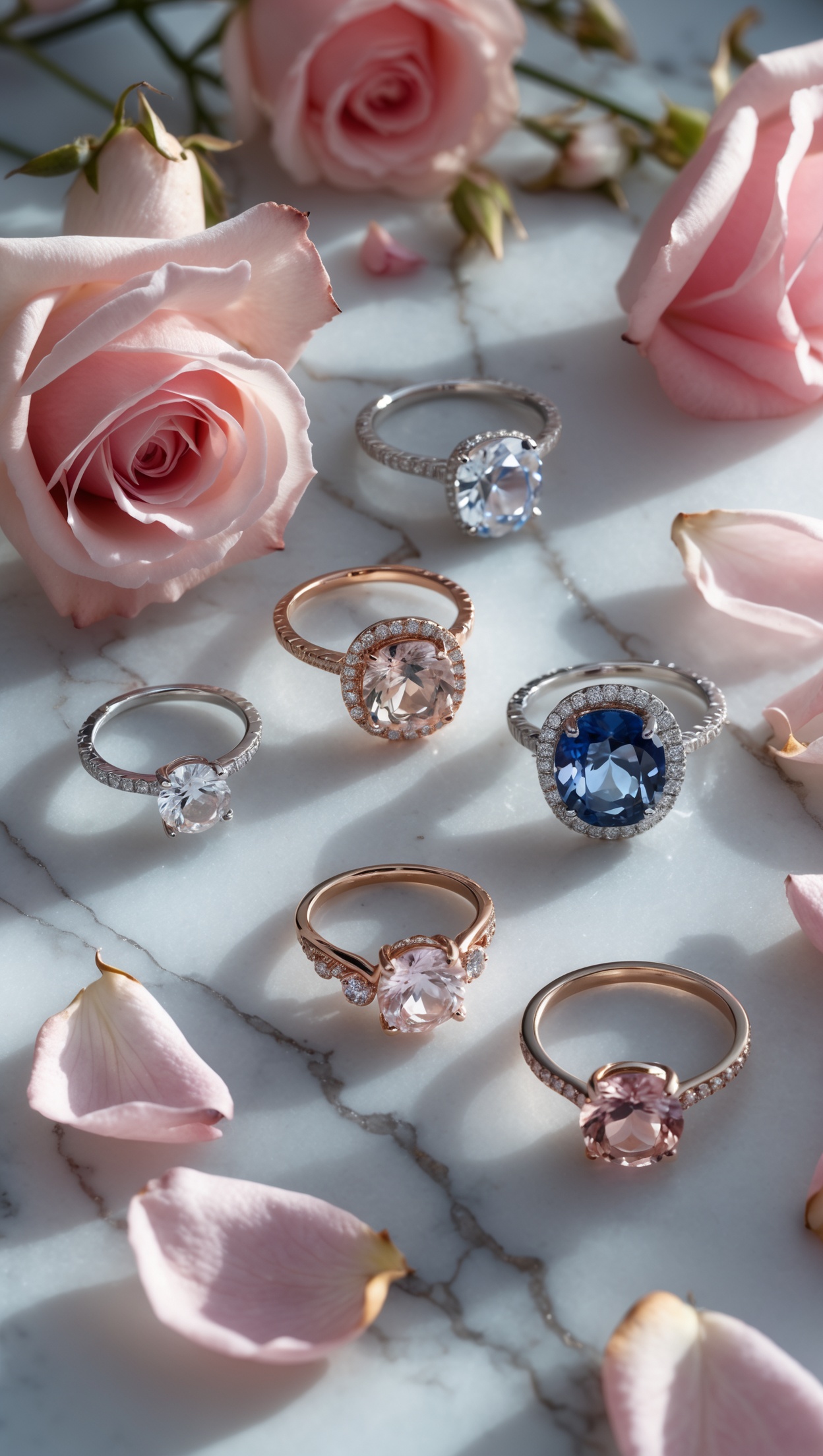
  • Appearance: Warm blush-pink tones that pair beautifully with rose gold settings
  • Verdict: Ideal for the modern romantic who wants something unique and soft

Morganite looks stunning when set in rose gold, creating a warm, monochromatic look that feels both luxurious and contemporary. It photographs beautifully, making it a popular choice among influencers and style-conscious buyers alike.

Aquamarine: The Colour of Calm

With its ethereal blue-green hue reminiscent of tropical waters, aquamarine is a stone that feels both serene and sophisticated. It belongs to the beryl family (the same as morganite and emerald) and is known for its exceptional clarity.

  • Hardness: 7.5–8 on the Mohs scale
  • Price: Generally affordable, particularly for pale stones
  • Appearance: Pale to medium blue-green, often with remarkable transparency
  • Verdict: A sophisticated choice for those who prefer cool-toned, minimalist jewellery

Aquamarine is especially popular in statement cocktail rings and pendant necklaces. Its natural elegance pairs well with both silver and white gold settings, giving it a clean, modern aesthetic.

Lab-Grown Gemstones: Ethics Meets Elegance

Beyond natural alternatives, lab-grown gemstones are revolutionising the jewellery industry. These stones are chemically, physically, and optically identical to their mined counterparts — but they are created in controlled laboratory environments, making them more affordable and significantly more ethical.

Lab-grown rubies, emeralds, and sapphires are now available at a fraction of the cost of natural stones, without any compromise in beauty or quality. For eco-conscious shoppers, this is a particularly compelling option.

Cubic Zirconia: The Budget-Friendly Classic

No list of diamond alternatives would be complete without cubic zirconia (CZ). It has been a popular diamond substitute since the 1970s and remains one of the most affordable options on the market. While it is softer than moissanite and scratches more easily over time, high-quality CZ can look stunning — especially in fashion jewellery pieces that are not intended for heavy daily wear.

  • Hardness: 8–8.5 on the Mohs scale
  • Price: Extremely affordable
  • Appearance: Bright and clear, but less fiery than moissanite
  • Verdict: Best for trend-led fashion jewellery and occasional wear

How to Choose the Right Diamond Alternative for You

Choosing the right stone depends on several personal factors:

  • Lifestyle: If you lead an active life, prioritise stones with a Mohs hardness of 8 or above
  • Budget: Moissanite and CZ offer the most value; sapphires and morganite sit in the mid-range
  • Style: Do you prefer classic white sparkle, soft romantic hues, or bold colour?
  • Ethics: Lab-grown options are the most sustainable and conflict-free

There is no single right answer — the best gemstone is the one that speaks to you personally and fits your lifestyle and values.

Caring for Your Gemstone Jewellery

Regardless of which stone you choose, proper care will keep it looking beautiful for years:

  • Clean regularly with warm water and mild soap using a soft brush
  • Store pieces separately to avoid scratching
  • Remove jewellery before swimming, exercising, or applying beauty products
  • Have settings checked by a jeweller annually to ensure stones are secure

For a touch of luxury and high fashion, MINOX offers an exclusive boutique experience with premium pieces. For even more fashion inspiration and outfit ideas, Voghion offers thousands of on-trend pieces at great prices.
🇩🇪 Deutsch

Dieser Artikel enthält Affiliate-Links (Werbung). Kaufst du darüber, erhalten wir ggf. eine Provision – für dich ohne Mehrkosten.

Warum Diamanten nicht mehr die einzige Option sind

Jahrzehntelang galten Diamanten als das ultimative Symbol für Liebe, Luxus und zeitlose Eleganz. Das Marketing dahinter ist so wirkungsvoll, dass viele Menschen nie hinterfragen, ob es Alternativen gibt — Alternativen, die genauso schön sind, manchmal sogar schöner, und dabei deutlich günstiger. Die Welt der Edelsteine ist riesig, atemberaubend und voller Steine, die Diamanten in Brillanz, Farbe und Charakter ebenbürtig sind oder sogar übertreffen.

Ob du nach einem Verlobungsring, einer Statement-Kette oder einem zarten Alltagsschmuckstück suchst — Diamant-Alternativen verdienen ernsthafte Aufmerksamkeit. Hier erfährst du alles über die schönsten Steine, die heute erhältlich sind, und warum immer mehr modebewusste Käuferinnen und Käufer ihnen den Vorzug vor klassischen Diamanten geben.

Moissanit: Das perfekte Diamant-Double

Wer maximalen Glanz ohne den Diamanten-Preis möchte, ist mit Moissanit bestens beraten. Ursprünglich in einem Meteoritenkrater entdeckt, wird Moissanit heute im Labor hergestellt und ist weit verbreitet. Er hat einen höheren Brechungsindex als ein Diamant und erzeugt dadurch noch mehr Lichtspiele — eine Eigenschaft, die als Feuer bezeichnet wird.

  • Härte: 9,25 auf der Mohs-Skala (Diamanten: 10) — extrem widerstandsfähig im Alltag
  • Preis: Typischerweise 80–90 % günstiger als ein vergleichbarer Diamant
  • Aussehen: Mit bloßem Auge kaum von einem Diamanten zu unterscheiden
  • Fazit: Die erste Wahl für budgetbewusste Käufer, die den Diamanten-Look wollen

Moissanit erfreut sich wachsender Beliebtheit bei Millennials und der Gen Z, die Wert auf Preis-Leistung und ethische Verantwortung legen. Wunderschön gefertigte Moissanit-Stücke in verschiedensten Fassungen und Stilen — für jeden Geschmack — gibt es zum Beispiel bei La Joya Jewelry La Joya Jewelry.

Saphir: Königlich schön und zeitlos

Durch Prinzessin Diana — und heute Kate Middleton — weltberühmt geworden, ist der blaue Saphir-Verlobungsring eines der ikonischsten Schmuckstücke der modernen Geschichte. Doch Saphire gibt es in nahezu jeder Farbe: Pink, Gelb, Weiß, Pfirsich und sogar das extrem seltene Padparadscha-Lachsrosa.

  • Härte: 9 auf der Mohs-Skala — ideal für den täglichen Gebrauch
  • Preis: Stark variierend, aber natürliche Saphire sind in der Regel deutlich günstiger als Diamanten ähnlicher Größe
  • Aussehen: Tiefe, satte Farbintensität mit natürlichem Glanz
  • Fazit: Perfekt für alle, die einen farbenfrohen, bedeutsamen und historisch bedeutenden Stein suchen

Weiße Saphire gewinnen zunehmend als Diamant-Substitute an Bedeutung. Sie bieten ein klares, helles Erscheinungsbild mit einem etwas sanfteren Glanz, den viele als dezenter und eleganter empfinden.

Morganit: Der romantische Rosa-Traum

Wer einen weichen, romantischen und femininen Schmuckstil bevorzugt, hat mit Morganit möglicherweise seinen Traumstein gefunden. Diese pfirsichrosafarbene Beryll-Varietät hat in den letzten zehn Jahren einen enormen Popularitätsschub erlebt — vor allem bei Verlobungsringen.

  • Härte: 7,5–8 auf der Mohs-Skala
  • Preis: Sehr erschwinglich, besonders in größeren Karatgrößen
  • Aussehen: Warme Rosatöne, die wunderschön mit Roségold-Fassungen harmonieren
  • Fazit: Ideal für die moderne Romantikerin, die etwas Einzigartiges und Zartes sucht

Morganit sieht in einer Roségold-Fassung besonders atemberaubend aus und schafft einen warmen, monochromen Look, der sowohl luxuriös als auch zeitgemäß wirkt. Er fotografiert wunderschön und ist daher besonders beliebt bei Influencerinnen und stilbewussten Käuferinnen.

Aquamarin: Die Farbe der Ruhe

Mit seinem ätherischen Blau-Grün-Ton, der an tropische Gewässer erinnert, ist Aquamarin ein Stein, der sowohl beschaulich als auch anspruchsvoll wirkt. Er gehört zur Beryll-Familie (wie Morganit und Smaragd) und ist für seine außergewöhnliche Klarheit bekannt.

  • Härte: 7,5–8 auf der Mohs-Skala
  • Preis: Generell erschwinglich, besonders bei helleren Steinen
  • Aussehen: Helles bis mittleres Blau-Grün, oft mit bemerkenswerter Transparenz
  • Fazit: Eine elegante Wahl für alle, die kühle Töne und minimalistischen Schmuck bevorzugen

Aquamarin ist besonders beliebt in Statement-Cocktailringen und Anhänger-Ketten. Seine natürliche Eleganz harmoniert sowohl mit Silber- als auch mit Weißgold-Fassungen und verleiht ihm eine klare, moderne Ästhetik.

Laborerstellte Edelsteine: Ethik trifft Eleganz

Neben natürlichen Alternativen revolutionieren im Labor hergestellte Edelsteine die Schmuckindustrie. Diese Steine sind chemisch, physikalisch und optisch identisch mit ihren abgebauten Gegenstücken — werden aber in kontrollierten Laborumgebungen hergestellt, was sie günstiger und deutlich ethischer macht.

Im Labor hergestellte Rubine, Smaragde und Saphire sind jetzt zu einem Bruchteil der Kosten natürlicher Steine erhältlich, ohne Abstriche bei Schönheit oder Qualität. Für umweltbewusste Käuferinnen und Käufer ist dies eine besonders überzeugende Option.

Zirkonia: Der budgetfreundliche Klassiker

Keine Liste von Diamant-Alternativen wäre vollständig ohne Zirkonia (CZ). Seit den 1970er Jahren ist er als Diamant-Ersatz beliebt und bleibt eine der günstigsten Optionen auf dem Markt. Er ist zwar weicher als Moissanit und verkratzt mit der Zeit leichter, aber hochwertiger Zirkonia kann atemberaubend aussehen — besonders in Modeschmuckstücken, die nicht für den intensiven täglichen Gebrauch gedacht sind.

  • Härte: 8–8,5 auf der Mohs-Skala
  • Preis: Extrem erschwinglich
  • Aussehen: Hell und klar, aber weniger feurig als Moissanit
  • Fazit: Am besten für trendigen Modeschmuck und gelegentlichen Gebrauch geeignet

Wie du die richtige Diamant-Alternative für dich wählst

Die Wahl des richtigen Steins hängt von mehreren persönlichen Faktoren ab:

  • Lebensstil: Wenn du aktiv bist, wähle Steine mit einer Mohs-Härte von 8 oder höher
  • Budget: Moissanit und Zirkonia bieten das beste Preis-Leistungs-Verhältnis; Saphire und Morganit liegen im mittleren Preissegment
  • Stil: Bevorzugst du klassisches weißes Funkeln, zarte romantische Töne oder kräftige Farben?
  • Ethik: Laborhergestellte Optionen sind am nachhaltigsten und konfliktfreiesten

Es gibt keine einzig richtige Antwort — der beste Edelstein ist derjenige, der dich persönlich anspricht und zu deinem Lebensstil und deinen Werten passt.

Pflege deines Edelsteinschmucks

Unabhängig davon, welchen Stein du wählst, sorgt die richtige Pflege dafür, dass er jahrelang schön bleibt:

  • Reinige deinen Schmuck regelmäßig mit warmem Wasser und milder Seife und einer weichen Bürste
  • Bewahre Stücke getrennt auf, um Kratzer zu vermeiden
  • Lege Schmuck vor dem Schwimmen, Sport oder dem Auftragen von Schönheitsprodukten ab
  • Lass die Fassungen einmal jährlich von einem Juwelier prüfen, um sicherzustellen, dass die Steine sicher sitzen

Fuer einen Hauch Luxus und High Fashion bietet MINOX ein exklusives Boutique-Erlebnis mit Premium-Pieces. Fuer noch mehr Modeinspiration und aktuelle Trends findest du bei Voghion tausende Styles zu attraktiven Preisen.